When I found out that I would need chemotherapy, like most women, I was terrified and completely overwhelmed by the thought of losing my hair. Although there are chemotherapy treatments that affect the hair follicles less — or sometimes not at all — unfortunately, I received one that is known to cause significant hair loss. With this type of treatment, most people lose all of their hair, including body hair.
After the initial shock and despair, I decided to prepare myself before the hair loss began.
I started researching online to understand how it would work and what options were available for head coverings. Maintaining my sense of femininity was very important to me, so I approached this topic with that goal in mind.
Below I’m sharing what I learned — hopefully it may help others. I’ll also describe my experiences since then: what worked for me, what didn’t, and why.
1) Cold Cap
My oncologist initially advised me not to purchase any hair accessories if I was willing to give the cold cap a chance. At the hospital where I received treatment, a machine cools the hair follicles before chemotherapy, and the cap must be worn before, during, and after the session.
I’ll write a more detailed post about this later, but briefly, the disadvantages include:
-An uncomfortable, sometimes painful freezing sensation for several hours
-Possible headaches Spending more time at the treatment center
-Feeling extremely cold during use
-There is also a very slight increase in the risk of scalp metastasis, since the purpose is to reduce the effect of chemotherapy on the scalp.
The advantage, however, is that you have a better chance of keeping at least some of your hair — sometimes even a large portion of it. Regrowth is often faster, and it may reduce the risk of long-term hair thinning.

I decided to try it. Still, because my chemotherapy was aggressive, I remained afraid of losing my hair. So I chose to prepare in advance and buy a few things. I didn’t want to be left without options if my hair started falling out suddenly.
In my case, the hair loss was not sudden. However, several people I know experienced rapid shedding because the cold cap didn’t work for them or they couldn’t tolerate the discomfort. For that reason, I would recommend that everyone prepare for this possibility.
2) Cheap and Dark Head Coverings
At first, I ordered several inexpensive pieces, thinking that if I didn’t need them, at least I wouldn’t have spent much money. It quickly became clear that this wasn’t a good idea.
The first items I ordered were completely unusable. The material was rough — uncomfortable even before chemotherapy, let alone afterwards when the scalp becomes drier and more sensitive. Many were made of thin fabric that would lose shape after just a few washes. Often, the colour and shape didn’t match the photos online.
I also realized that the dark colours I had previously preferred might not be the best choice. I have light hair and fair skin. When you add the paleness that chemotherapy can cause (due to anaemia), along with the possible loss of eyebrows and eyelashes, the overall effect can become quite harsh.
At one point, I even started to feel uncomfortable with black. It reminded me of the possible worst outcome — something I didn’t want to project to myself or others.

3) Headscarves
I think headscarves look beautiful on many women. Unfortunately, I felt I wasn’t one of them.
Here’s what I learned:
-Simply placing a scarf flat on my head made it look very flat — not flattering for my wider face and neck.
-Without hair underneath, it would likely look even flatter.
-Dark colours made the effect worse. Colour matters greatly because it frames the face.
-Pre-tied scarves also looked flat on me. Side-tied styles felt awkward.
-Fabric is extremely important. Slippery materials are difficult to tie and can feel insecure.
-Some fabrics are slightly transparent, which can be an issue with hair loss. Wrapping it multiple times or in a turban style looked better, but securing it properly requires practice — something I didn’t always have the energy for during treatment.
-There are also “turban lifts” (caps with padding or structure underneath), but for me that felt too complicated during chemotherapy.
4)Hats
Baseball caps didn’t suit my style. Simple cotton beanies didn’t feel right either.
What worked for me were soft hats with subtle ruffles, decoration, layering, or a slightly structured shape that visually elongated my face. I mostly wore these at home or after cold cap sessions.

5) Combined Hat/Scarf Styles
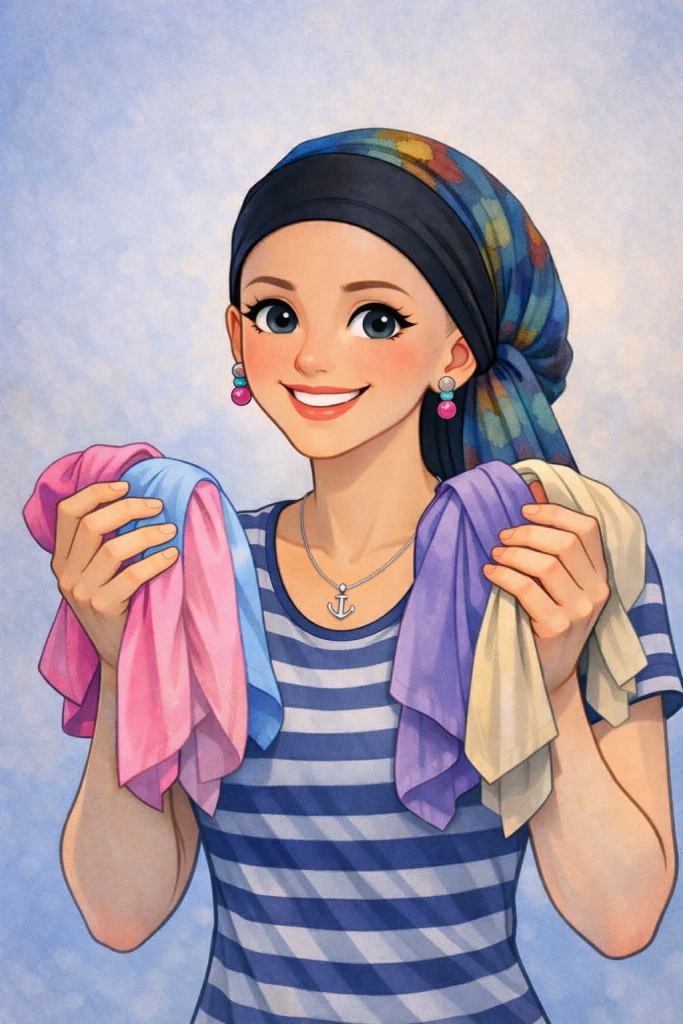
I bought several because they looked beautiful, especially colorful ones paired with earrings. They were comfortable too. In the end, however, I didn’t use them much because I found beautiful wigs that reminded me of my pre-diagnosis appearance.
6) Wigs
This topic deserves a separate post.
There are synthetic and human-hair wigs. Synthetic wigs are easier to maintain — after washing, they return to their original style. Human-hair wigs must be styled like natural hair.
I chose synthetic wigs because I knew I wouldn’t have the energy to style hair after chemotherapy. Surprisingly, you can find very natural-looking, mid-range synthetic wigs at reasonable prices. Truly high-quality human-hair wigs are beautiful but extremely expensive.
My favourite wigs were mid-range synthetic ones — so natural that most people simply asked if I had cut my hair shorter.

7) Headbands
I hadn’t considered headbands at first. Later, when my hair began thinning around the edges due to the cold cap, they became the simplest solution. For activities like yoga, they were perfect.
Overall Conclusion
I bought too many things too quickly, and most of them I never used.
Cheap head coverings weren’t worth it — softness, comfort, and durability matter far more than price.
Colorful pieces worked better for me than very dark ones.
With wigs, price mattered less than quality and natural appearance. My mid-range synthetic wigs became my favorites.
At home, I mostly wore soft cotton hats with slight decorative details.
If I could go back in time, I would only buy those two things.


 Blooming Anyway
Leave a comment