It was early July 2025. I was eagerly awaiting the holiday in Hungary I had booked with the children. I had been dieting since February so that I could stroll along the beach at Lake Balaton with a peaceful heart, and by then I had achieved quite beautiful results. I admired myself in the mirror before showering, satisfied, because since my pregnancies—nearly fourteen years ago—I hadn’t managed to lose this much weight.
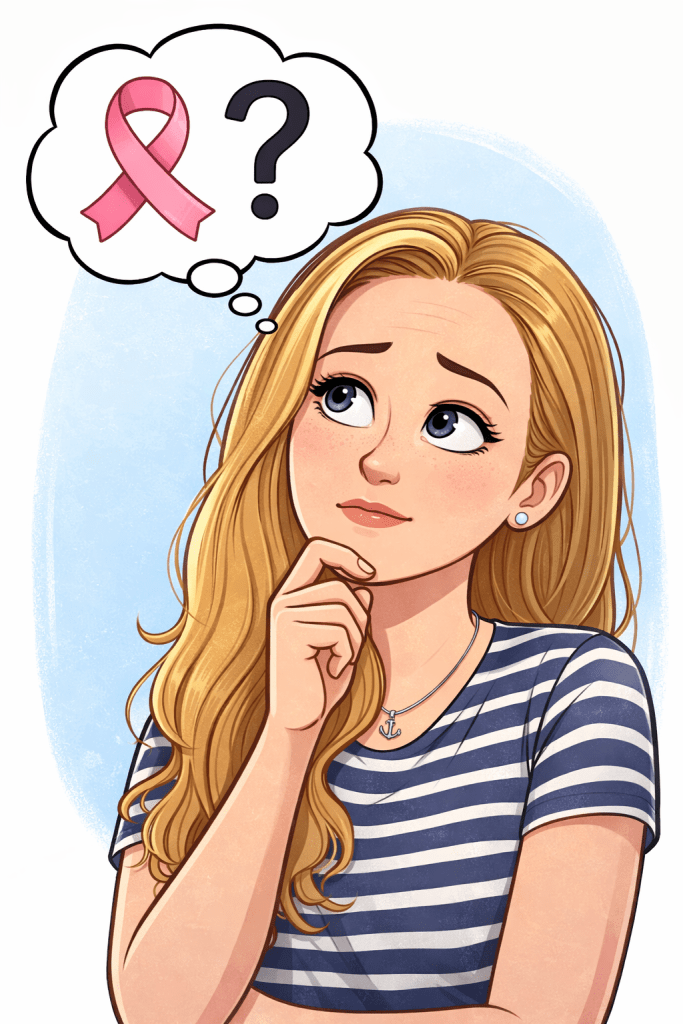
The eczema-like irritation on my right breast had just healed, which was a relief. But as I looked at myself in the mirror, that breast seemed slightly fuller than the other. Had there always been such a difference? I had never really noticed… Then again, they say breasts are sisters, not twins, so perhaps I had simply been inattentive.
Still, something stirred inside me at the discovery, so I turned sideways to examine myself from that angle. When I raised my arms forward, I saw a small indentation on the side of my breast. That unsettled me. I remembered a poster on the door of a public restroom listing possible signs of breast cancer—indentation among them.
I lifted both breasts with my hands. The right one felt noticeably heavier. My thoughts began racing. My well-known hypochondria, however, still protected me—at least somewhat—from full-blown panic. What a contradiction. I’ve spiraled over so many pointless things before, I thought. Maybe there is a cyst or a fatty lump inside, nothing more surely.
Meanwhile, the DNA test I had recently taken floated into my mind. It had indicated that I belong to an ethnic group in which BRCA1–2 gene mutations—associated with breast and pancreatic cancer—occur more frequently than average. My father had died of pancreatic cancer… could it be? That thought made me truly anxious. I sat down.
I felt around the small indentation and froze as I realized there was a slightly elongated, oval, rubber-ball–like mass in my breast—about 4–5 centimeters—firm yet elastic, painless. Surely it’s just a fatty lump. It must be. There’s no breast cancer in my family. I breastfed…
Is it movable? They say if it moves, it’s not dangerous… Well, it does and it doesn’t. It feels separate from everything else, but it doesn’t slide around freely. At that moment I silently cursed myself for not checking my breasts regularly; I no longer remembered what “normal” was supposed to feel like.
I examined the other one. Soft. Nothing rubbery inside. Maybe the previous rash caused some glandular inflammation? I went to bed clinging to that hope.
The next day I trudged to my GP’s office. My regular doctor was on holiday, so a new female doctor saw me. I was both relieved and uneasy. Relieved because, unlike my usual physician, at least a woman would be examining my bare breasts. Uneasy because I had often encountered a certain dictatorial tone among female doctors locally—something I always suspected might stem from their own hard-fought battles. Despite my attempt at generosity, I couldn’t shake the fear that someone might dismiss me—or terrify me.
The doctor fit the familiar image with her unsmiling manner, but thankfully she took me seriously. After a brief consultation, she examined my breasts thoroughly. She judged the lump to be movable, yet together with the difference in size and weight between the two breasts, she considered it sufficient reason to refer me to the local breast clinic for further tests. The waiting time: about two weeks.
At home I analyzed the lump again and again. In the mirror, without the mirror… I didn’t feel that it moved all that much in any direction. Panic began to take over. I felt I couldn’t wait two weeks. Especially since even then the truth might not be clear—who knows how many additional tests they would order.
Despite my hypochondria, I rarely pay for private care because where I live it is quite expensive, and since I live on an island, traveling elsewhere is also difficult and costly. This time, however, I felt it couldn’t wait. I booked a private appointment for the very next day.
The following evening, after work, I found myself in an elegantly furnished office. A young-looking yet decisive doctor with a calm, kind manner welcomed me. He listened patiently to my symptoms, then suggested both a manual exam and an ultrasound. He examined both breasts standing and lying down, with arms raised and lowered, then moved the ultrasound probe across them and into the armpit areas.
He said nothing about what he saw but spoke to me reassuringly. When he finished, he asked me to get dressed, and said we would discuss the results afterward.
I did so, and once dressed, I sat across from him at her desk. I will never forget the tone in which he spoke to me, and I will always be grateful for it. It was human. I could feel the empathy in him, and that he very much wished she did not have to say what he was about to say. He could have rushed through it, but he didn’t. He knew that would cause pain. Instead, he spoke patiently:
“Look, I’m very sorry, but I think it’s important to tell you honestly as early as possible what I believe, so we can move things forward quickly. The lump in your breast looks like cancer on the ultrasound, and the enlarged lymph nodes suggest local spread.”
He paused. What he said afterwards I can’t recall exactly. It was like in movies when all sound fades away and dizziness takes over, thoughts swirling in a million directions. I must have answered something because the conversation continued, but inside my head there was only chaos.
I remember talk of further tests, and that “nothing is certain until everything aligns,” and that I shouldn’t worry because today it is often treatable, sometimes even curable. But the message was unmistakable: this is cancer.
Strangely, my first thoughts were not despair about dying, but rather: How will I manage this if I have to take sick leave? What about my clients? At least I’ll get some rest… But what about the trip?
The weight of the diagnosis didn’t fully land. Or it did, and it didn’t. I understood the words and their meaning, yet I couldn’t identify with them. I kept repeating to myself: this is real cancer. The response inside me was emptiness.
I had previously had a basal cell carcinoma, which is technically cancer but rarely life-threatening. Perhaps that diluted the word’s gravity. At the same time, I knew perfectly well that breast cancer is not in the same category—especially if it has already spread. The shock prevented my emotions from surfacing immediately. So with a strange objectivity, emotionally distant, I left after thanking the doctor.
Only in the car did the tears begin to fall, with some encouragement. Still not from deep feeling—but at least something. “Cancer, real cancer! Collapse already like any normal person would at news like this! Even now you can’t react properly?” I shouted at myself silently.
Strangely, I needed that self-scolding before driving home. It felt safer to let something begin to process than to risk it erupting suddenly while I was behind the wheel.
At home, everyone was waiting for the reassuring news that did not come. My tears did not surprise anyone. They thought it was natural. Only I felt the reaction was somehow misplaced. I didn’t dare tell anyone that I still felt mostly numb, and that I was crying more from frustration that it didn’t hurt more.
I felt unfit to be a woman, a partner, a mother, a daughter, a friend, a worker—anything. Because if it didn’t hurt deeply, that must mean I was indifferent to leaving everything and everyone behind. And if that were true, perhaps I wasn’t capable of loving anyone or anything deeply in this life—including life itself. I had failed. I would disappoint everyone. I wasn’t authentic. I wasn’t enough.
Even the raw horror of cancer could not summon the “appropriate,” “normal” emotions from me. Perhaps it was better that the illness had come for me.
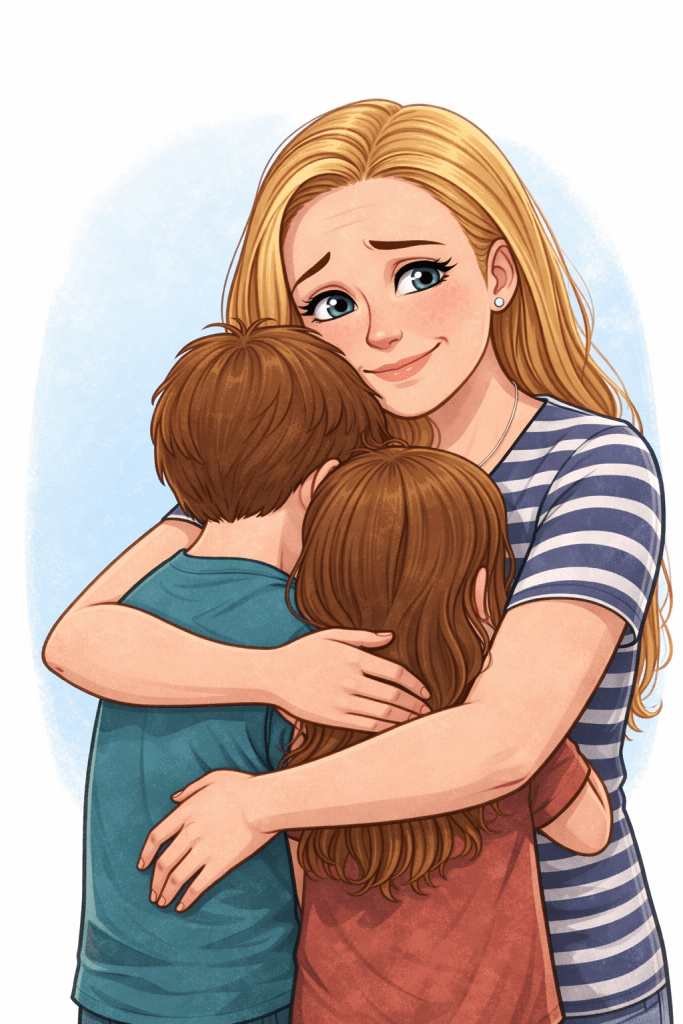
I was pulled from that torrent of self-blaming thoughts by my children’s desperate reaction when we told them the news.
There is something extraordinary about maternal instinct. There is no depth it cannot reach.
Suddenly I found myself comforting them passionately: I will fight. If there is a way, I will recover. I will dance at your weddings. I will drown you in unsolicited parenting advice when you have children of your own…
We cried, we laughed… nothing else mattered but them. And suddenly I caught myself already planning the steps—how I would defeat this deadly disease.
And I knew one thing with certainty: I must find my way back to myself, so that even in the midst of the greatest tragedy, my first thought will no longer be that somehow, in some twisted way, this too is proof of my inadequacy.

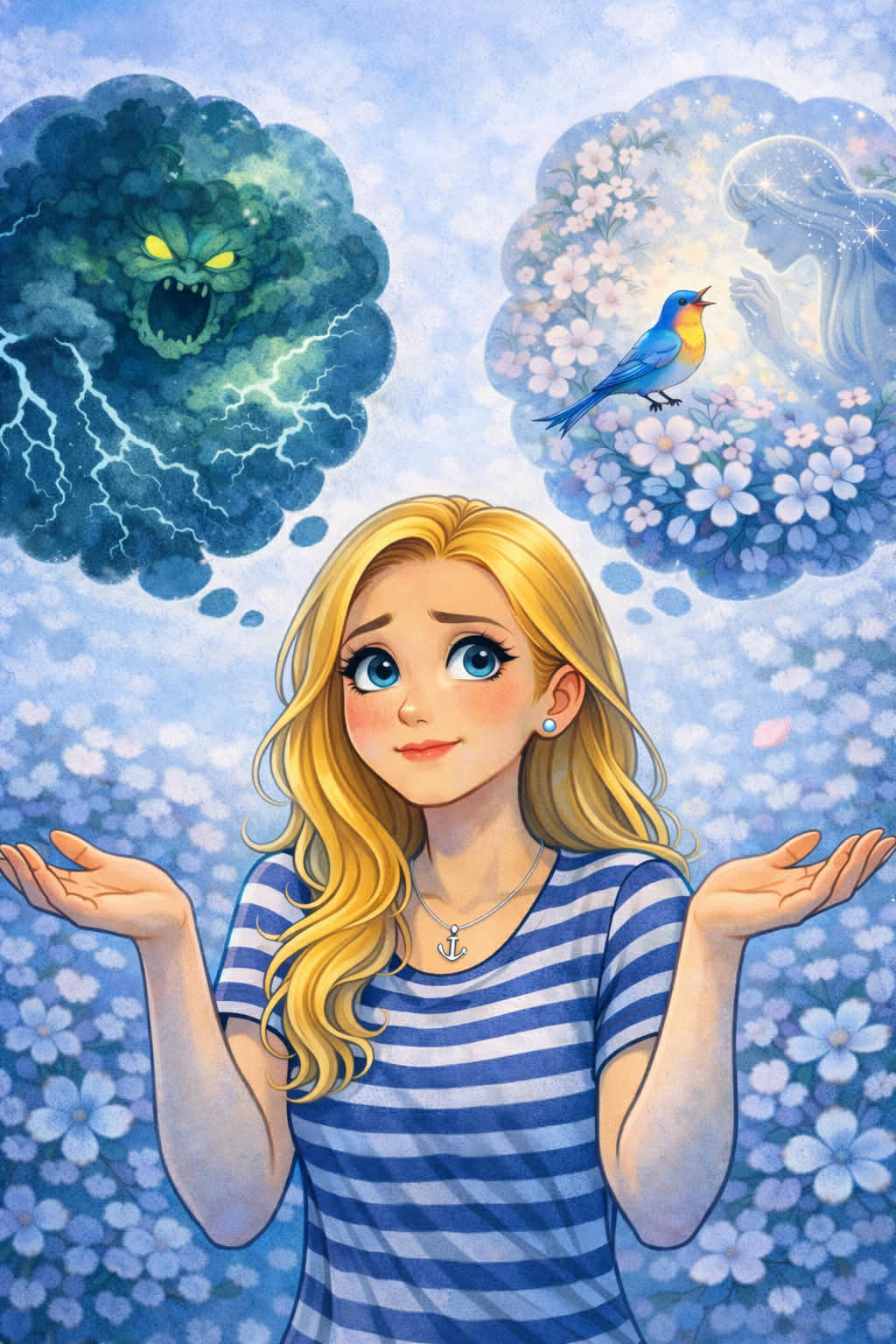
 Blooming Anyway
Leave a comment